Helicopter flight suits and aviation suits for professional crews
Explore one-piece, two-piece and custom flight suits developed around cockpit movement, operational pocket access, visibility and long-shift comfort. Whether your operation calls it a helicopter suit, a flight suit or an aviation suit, the NVQ FS range is being developed for the same crews: professional HEMS, SAR, offshore, utility and specialist aircrew.
The NVQ flight suit range
Flight suits built around the working day
NVQ's goal with the FS range is stated plainly: build the perfect flight suit — comfortable in every situation. In practice that means a suit designed for 12-hour shifts: cockpit movement with a harness over it, one-handed pocket access with gloves on, visibility and identification on scene, and a cut that works seated, kneeling and climbing — not just standing. Operators use different words for the same garment — helicopter suit, flight suit, aviation suit, pilot suit — and the requirements above are the same whichever term the tender uses.
For the concrete criteria we design against, read how to choose a helicopter flight suit.
One-piece, two-piece and custom
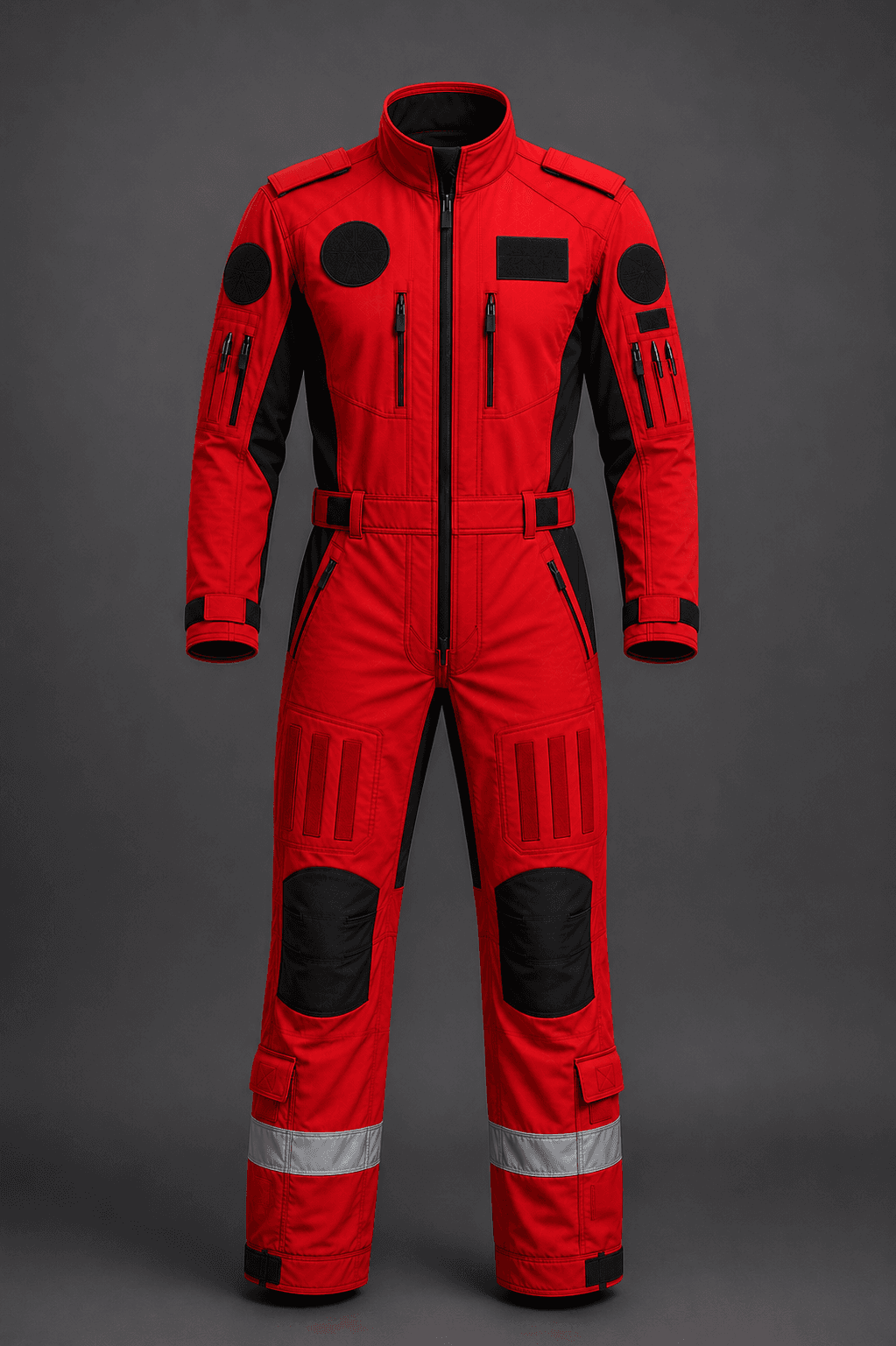
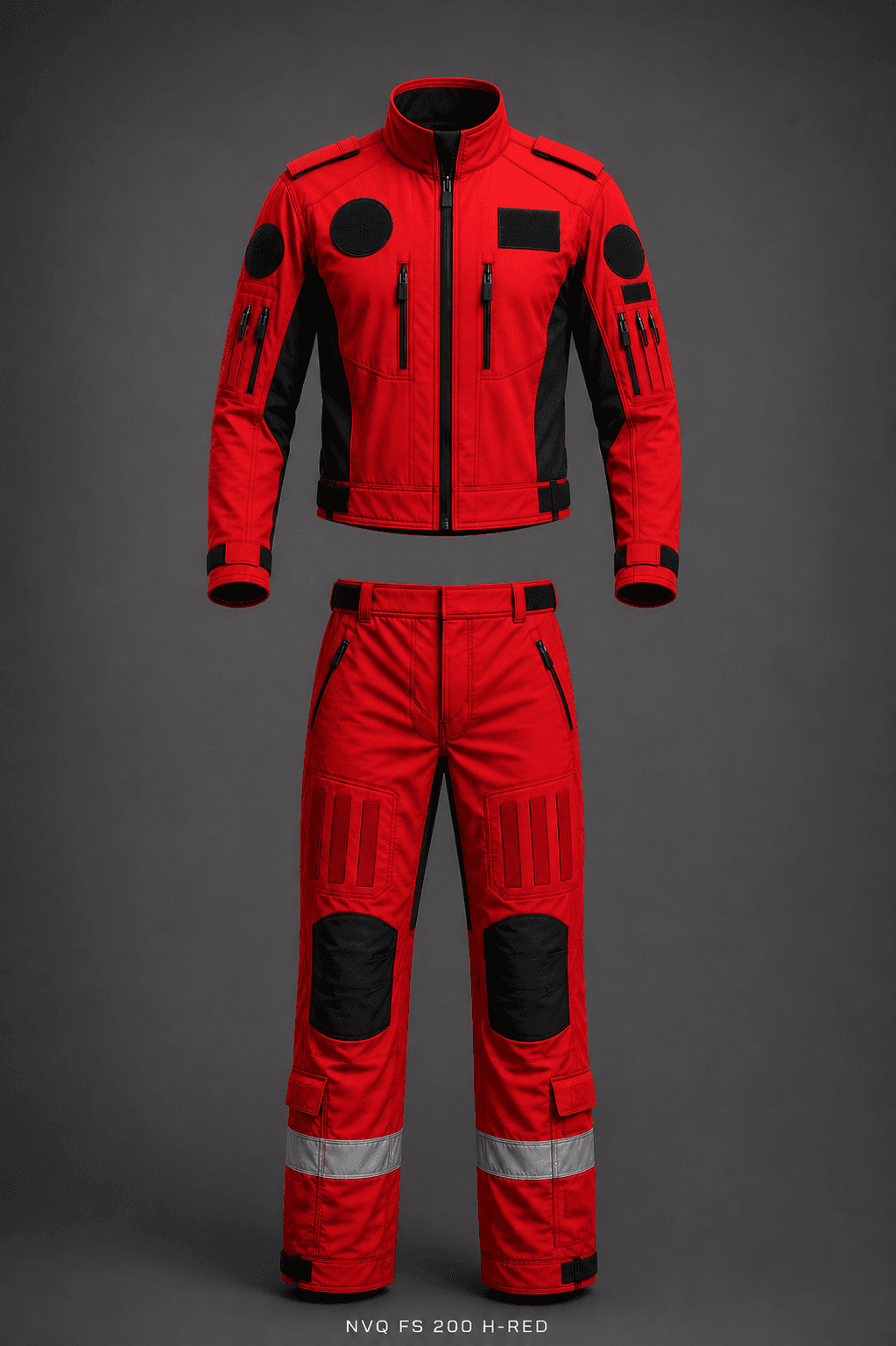
The range covers both constructions from the same design language: the FS100 platform as the one-piece suit and the FS200 as the two-piece jacket and trousers, so a mixed programme still looks like one crew. The practical trade-offs between them are covered in one-piece vs two-piece flight suits.
Where a standard cut can't serve every role, the custom flight suit programme develops a suit around an operator's own requirements — colours, pocket layout, identification and sizing across the roster.
For HEMS, SAR, offshore and utility operations
Professional aviation suits are configured differently per mission: high-visibility colours and reflective detailing for HEMS night landings and roadside scenes, consistent crew identification for SAR work, and configurations suited to offshore and utility flying. Tell us the mission and roles, and NVQ proposes a configuration to match.
What the construction actually consists of
The FS100 platform is a one-piece suit with a high collar and front zip closure, vertical zip pockets at chest and thigh, operational arm and utility pockets, reinforced knee zones, reflective lower-leg bands and adjustable waist, cuffs and leg openings. The FS200 carries the same language across a jacket and trousers, with ID and patch panels on the jacket.
Two details there matter more than they look. Vertical zip pockets hold their contents through movement, where an open-top pocket empties itself when a crew member kneels or leans forward. And adjustability at waist, cuffs and leg openings is what lets one cut serve a whole roster rather than fitting the middle of it — the difference between a suit that is ordered once and a suit that is re-ordered for every new crew member.
Materials and documentation: what to ask any supplier
A professional flight suit should come with its fibre composition and fabric weight in g/m² stated, and with documentation of which standards — if any — the exact garment configuration has been tested against. A protection claim that cannot be produced in writing for the specific product and configuration you are ordering is marketing, not a specification.
NVQ applies that standard to its own range as well: the FS suits are still in development, and this page will state materials, weights and any tested standards for each configuration when they are confirmed — not before. The full set of selection criteria is in how to choose a helicopter flight suit.
A flight suit is not a survival suit
These are different garments for different risks, and the terms get used interchangeably in enquiries. A flight suit is worn for the whole shift and is built around movement, pockets and identification. An immersion or anti-exposure suit protects against cold water after a ditching and is selected against the over-water operation and the aircraft — a separate decision, covered under helicopter survival and immersion suits. Crews flying over water often need both, and they are specified independently of one another.
Aviation suits as part of a crew programme
Most operators buy flight suits more than once — new crew, replacements, re-orders with the same company branding. Through Organisation Solutions an operator keeps approved suit configurations and sizes on file in the NVQ platform, so crew members order the right suit themselves and the company keeps one consistent appearance across every base and every order.